

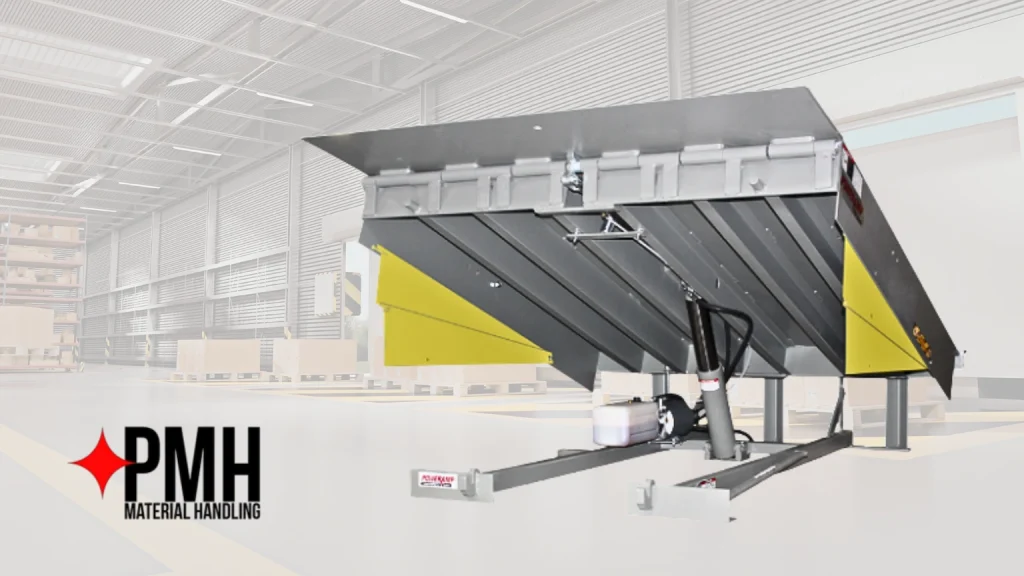
Choosing the right dock leveler is one of those decisions that seems straightforward until you’re looking at a quote wondering if you’re selecting a good long term solution. A loading dock system that will work well, be cost effective, easy to install and maintain with your facility starts with a professional loading dock installation.
For facility managers across western Pennsylvania, eastern Ohio, and West Virginia, knowing how to choose a dock leveler comes down to more than just picking the cheapest option on the shelf. Start by selecting the right type of leveler, EOD Edge of Dock, Pit Leveler or even a Scissor Dock Lift, then calculate the load capacity and you’ll be heading in the right direction.
The wrong choice means downtime every time a trailer pulls in at an awkward height, potential injuries when workers navigate unstable dock plates, and compatibility headaches when your leveler simply doesn’t fit the way your trucks — and your building — actually work.
At PMH Material Handling, we’ve installed and serviced dock levelers at warehouses, distribution centers, and manufacturing facilities throughout Pittsburgh and the Tri-State area. We do see buyers focus on price first and application second without the help of a qualified loading dock expert.
This guide is designed to flip that equation. Here’s what actually matters: starting with the three main types of equipment and ending with the questions every facility manager should be able to answer before signing anything.
The Main Types of Pit Style Dock Levelers
Not all dock equipment and levelers are built the same, and the type you choose will have a direct impact on your daily operations, your maintenance budget, and how well your dock holds up through a western PA winter.
Hydraulic Dock Levelers
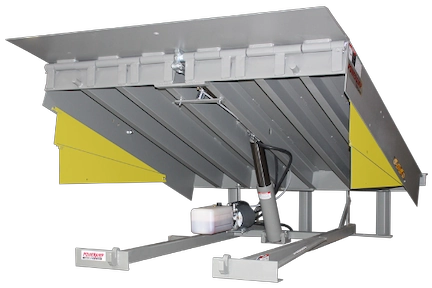
Hydraulic dock levelers are the workhorses of high-traffic facilities. Powered by a push-button control panel, they automatically raise the deck and extend the lip to meet the trailer — no manual effort required. For facilities running 30+ trucks a day, the ergonomic benefit alone often justifies the higher cost.
Hydraulically powered units offer a wider height adjustment range and far smoother, more consistent operation than mechanical models. They also tend to handle the repeated thermal cycling of PA winters better than units with more exposed moving parts.
The trade-off is upfront investment — plan for $10,000–$12,000 installed — plus the need for periodic fluid maintenance and seal inspections as the unit ages.
Air-Powered (Pneumatic) Dock Levelers
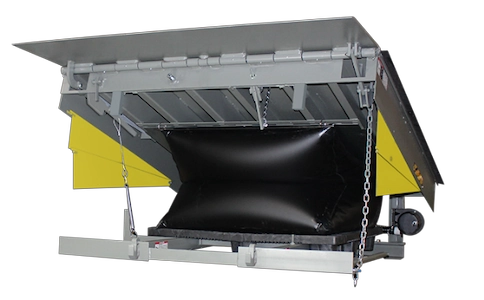
Air-powered dock levelers operate on a pneumatic system, using compressed air to raise the deck and extend the lip. They’re fast, they have no hydraulic fluid to manage, and they’re a popular choice in food processing and pharmaceutical facilities where contamination risk is a concern.
A self contained air powered leveler is an economic solution, 120volt power supply is required. Large scale facilities might be better to use compressed air supply at the dock by running pneumatic lines from the facility compressor. If your building is set up for it, air-powered units are an excellent option. If it’s not, you’re looking at a more involved dock leveler installation in Pennsylvania that will affect your total project cost.
Mechanical Dock Levelers
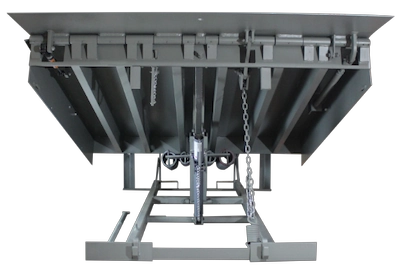
Mechanical dock levelers are the most widely installed type in the region, and for good reason.
They operate through a simple pull chain spring activation: a worker reaches down to pull the chain embedded in the leveler deck to release a stored spring, then manually adjusts the lip to meet the trailer bed. There are no hydraulic cylinders to service, no electrical components to troubleshoot, and no air lines to maintain.
The upside is clear: lower upfront cost (typically $5,000–$8,000 installed), straightforward mechanics, and fewer failure points.
The downside is just as real: every activation requires a worker to physically bend over to pull the release chain, then walk the platform down, which adds time and physical demand across a high-volume day. Mechanical units also have a narrower working range, which can be an issue when your dock sees a mix of van trailers, flatbeds, and refrigerated units that ride at very different heights.
Edge of Dock (EOD)
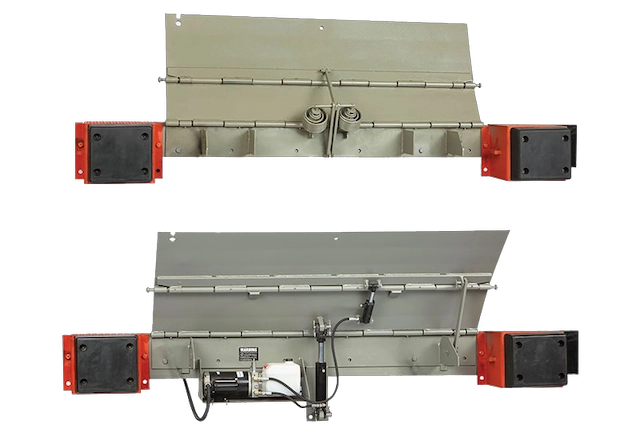
Edge of Dock (EOD) levelers are quick to install as long as the face of the dock has embedded steel c-channels into the concrete. A steel transition plate can be used instead of a c-channel, then weld the EOD and bumpers for a secure installation.
If you expect lighter ramp loads and little variation in trailer heights (within a 3” range above or below dock height), edge of dock levelers can be a good, entry-level choice.
They only accommodate a small range of trailer heights; however, they do not require a dock pit, which greatly simplifies installation. The simple installation and compact design make the edge of dock levelers an economical option for light-duty dock applications. The downside is an EOD can put undue ergonomic strain on your workers.
Choose from a basic Mechanical EOD or Hydraulic EOD
Other Options
Other Specialty Options Include, Vertical Storing Cold Storage Levelers, Scissor Dock Lifts, Rail Car Dock Levelers and Yard Ramps are common dock leveler types for specific applications.
5 Questions to Ask Before You Buy
Before you call for quotes, work through these questions. The answers will eliminate options and focus your budget where it belongs.
1. What Is Your Daily Truck Traffic Volume?
If your dock services 5–10 trucks per day, a mechanical unit will likely serve you fine for years. If you’re running 25–50 trucks or more, the physical wear of manual activation adds up — for your workers and the equipment. High-volume docks almost always benefit from hydraulic power over time, even when the upfront cost stings.
2. What Does Your Climate Look Like?
This one matters more than most equipment guides will admit. Western Pennsylvania winters are hard on dock equipment. Mechanical units with exposed springs and pivot points can stiffen or bind in sustained cold. Hydraulic fluid viscosity changes in low temperatures, which means older or poorly maintained units may respond sluggishly on a January morning when you need them most. Ask your dealer specifically how each unit handles freeze-thaw cycles — it’s a real operational concern in this region, not just a checkbox.
3. How Much Trailer Height Variation Do You See?
A facility that exclusively receives standard 48- or 53-foot van trailers at consistent dock heights can work with a narrower-range mechanical unit.
If you regularly handle flatbeds, drop-deck trailers, or refrigerated units with belly boxes, you need a leveler with a wider working range — typically a hydraulic or air-powered model — and you should verify that your dock truck restraints are compatible with the trailer types you’re receiving. A restraint that doesn’t engage properly on a low-ride trailer is a serious safety risk.
4. Do You Have a Maintenance Plan in Place?
No dock leveler is maintenance-free, and deferred maintenance is the most common reason for early failure. Mechanical units need lubrication, spring tension checks, and lip hinge inspections. Hydraulic units need fluid level checks, seal inspections, and periodic testing of the control system.
Before you buy, confirm that your facility has a plan — and that your dealer offers maintenance and repair services with realistic response times. A leveler that sits down in the middle of peak receiving season is not just an inconvenience; it’s lost revenue.
5. What Is Your Full Budget — Including Installation?
The purchase price of the unit is only part of the cost. Dock leveler installation in Pennsylvania will vary based on pit depth, concrete condition, the type of leveler being installed, and whether any electrical or pneumatic infrastructure needs to be added.
A mechanical unit with a new concrete pit to cut and pour curb angle is a different conversation than a mechanical unit that drops into an existing pit with minimal prep. Get an itemized quote that covers equipment, installation labor, and any required site work before you compare options.
Common Mistakes Facility Managers Make

Buying on Price Alone
The lowest-cost dock leveler is rarely the lowest-cost decision over a five-year horizon.
A mechanical unit installed in the wrong application will fail early. A hydraulic unit purchased without a maintenance contract will eventually leave you scrambling for emergency service.
Factor in total cost of ownership — expected service intervals, parts availability, and response time from your dealer — before you commit.
Ignoring Lip Length Requirements
Dock leveler lip length determines how much of the leveler deck bridges the gap onto the trailer. Standard lips are 15–16 inches, but if your dock services trailers that park further from the building face, you may need an extended lip.
Installing a unit with too short a lip means constant, unsafe bridging — and it’s not something you can easily fix after the fact without replacing the unit.
Skipping a Proper Site Survey
Every dock leveler installation in Pennsylvania should start with a site survey. Pit dimensions, concrete condition, door clearances, and trailer approach angles all affect which units will work and which will create problems.
Ordering equipment without a site survey — especially when buying online or through a catalog — is one of the most common and expensive mistakes we see. A proper survey takes less than an hour and can save you from a costly equipment mismatch.
Why Local Dealer Support Matters in PA/WV/OH
There are national equipment distributors who will sell you a dock leveler and ship it to your loading dock. What they won’t do is show up at 6 a.m. on a Wednesday when your unit is down and you have a full receiving schedule waiting.
Response Time for Repairs
When a dock leveler fails in the Pittsburgh area, western Pennsylvania, or across the WV and OH borders, response time is everything. A national brand’s nearest service center may be hours away.
Local dealers with regional service teams can typically get a technician on-site the same day or next morning — a meaningful difference when downtime is costing you money by the hour.
Familiarity With Regional Facility Layouts
Docks in western Pennsylvania and the tri-state region have their own characteristics — older industrial buildings with non-standard pit depths, facilities built on slopes, loading areas exposed to weather from the prevailing westerly winds.
A local dealer who has serviced hundreds of regional docks will recognize these issues immediately and recommend the right equipment. A catalog rep who has never seen your building won’t.
Emergency Service Availability
The question to ask any dealer you’re considering: what does your emergency service coverage look like, and what’s your average response time for a dock-down situation in my area?
A dealer who can’t answer that question specifically — or who routes you to a national call center — is a dealer who hasn’t earned your business yet.
Ready to Find the Right Dock Leveler for Your Facility?
Knowing how to choose a dock leveler is the difference between an investment that works reliably for 15 years and a recurring headache that costs you more every time you call for service.
The right choice depends on your traffic volume, your trailer mix, your climate exposure, and your budget for both equipment and ongoing maintenance — and those details are specific to your building, not a generic product comparison.
PMH Material Handling serves facilities throughout Pittsburgh, western Pennsylvania, West Virginia, and eastern Ohio.
Our team offers free dock assessments that cover equipment recommendations, site-specific installation considerations, and honest guidance on hydraulic vs. mechanical dock levelers for your application. No pressure, no guesswork — just a clear picture of what your dock actually needs.
Request a free dock assessment and let’s get it right the first time.